


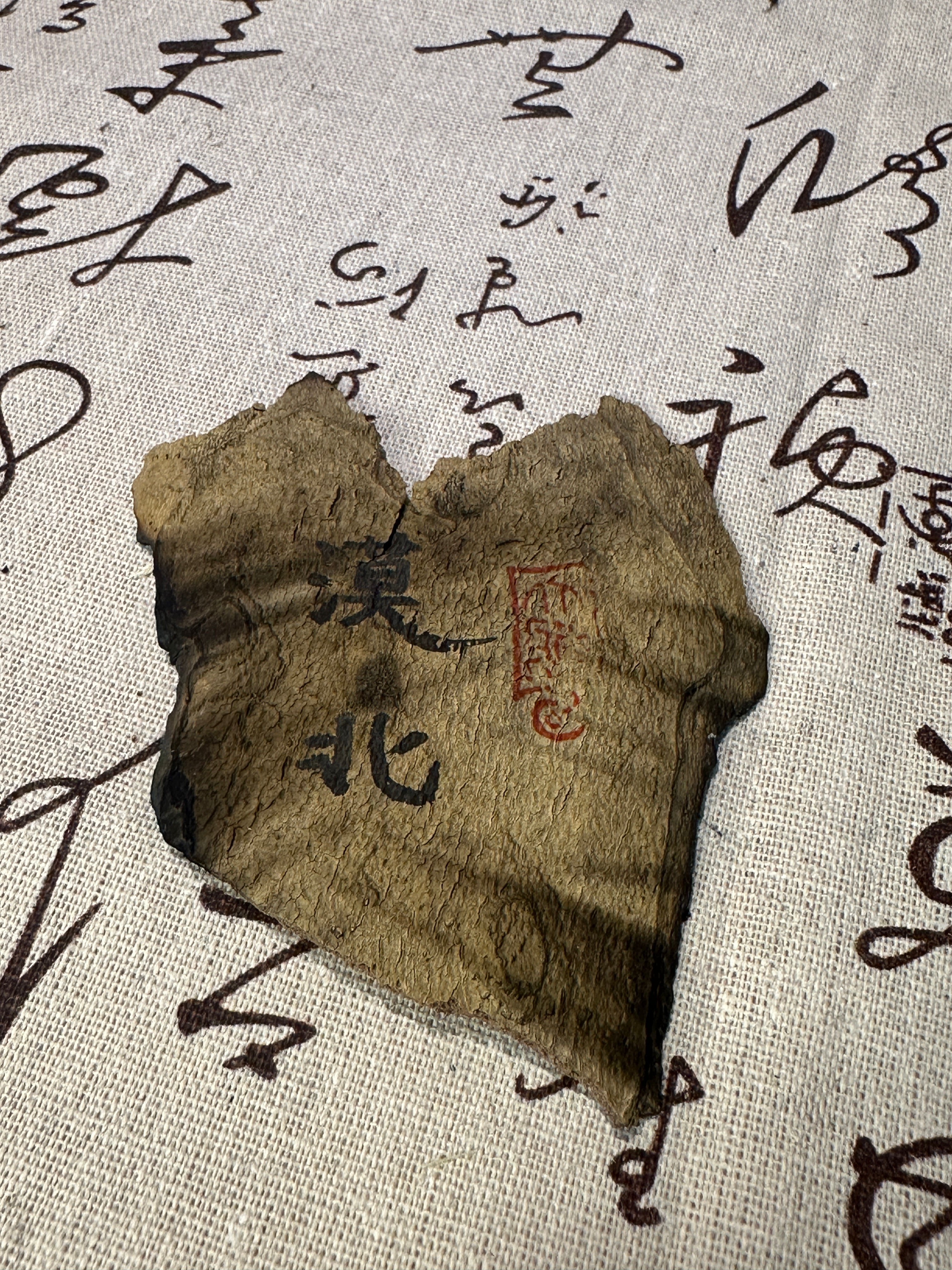
漠北 Mohe
【漠北 Mohe】
Wrote the characters for “Mohe” in ink, then gently smoked the bark over a candle flame to create varied textures and patterns.
Explanation of Mohe, "The Boundless Northern Desert"
The term "漠北" (Mohe), meaning "north of the desert," evokes a profound and multi-layered cultural landscape that stretches across centuries of Chinese poetry. Far beyond a simple geographical designation, it has evolved into a complex symbol.
For countless poets, Mohe was a place of exile, a destination reached through hardship and separation. This gave rise to profound emotions of longing and melancholy.
The Mohe journey becomes a metaphor for life's journey. It is a time of self-reflection, testing one's resolve, and forging new connections. The poet's personal sorrow is elevated to a universal human experience.
In summary, "漠北" (Mohe) in Tang and Song poetry is a rich tapestry of imagery. It is the vast, desolate canvas of nature, the stage for heroic deeds and national defense, the backdrop for personal exile and longing, and a source of profound philosophical reflection. To understand Mohe is to grasp a fundamental aspect of Chinese cultural identity—the intricate relationship between the individual, the nation, and the vastness of the natural world.
材質:
·梧桐树皮
·墨水
·小楷
Materials:
• Oriental Planetree bark
• Black ink
• Small script font
